Start with evidence
Attribution, impact and living status each require positive support-not repetition or assumption.
About Inventorbook
Inventorbook is an educational atlas that connects familiar physical products to the people, experiments, evidence and collaborative decisions that made them real.
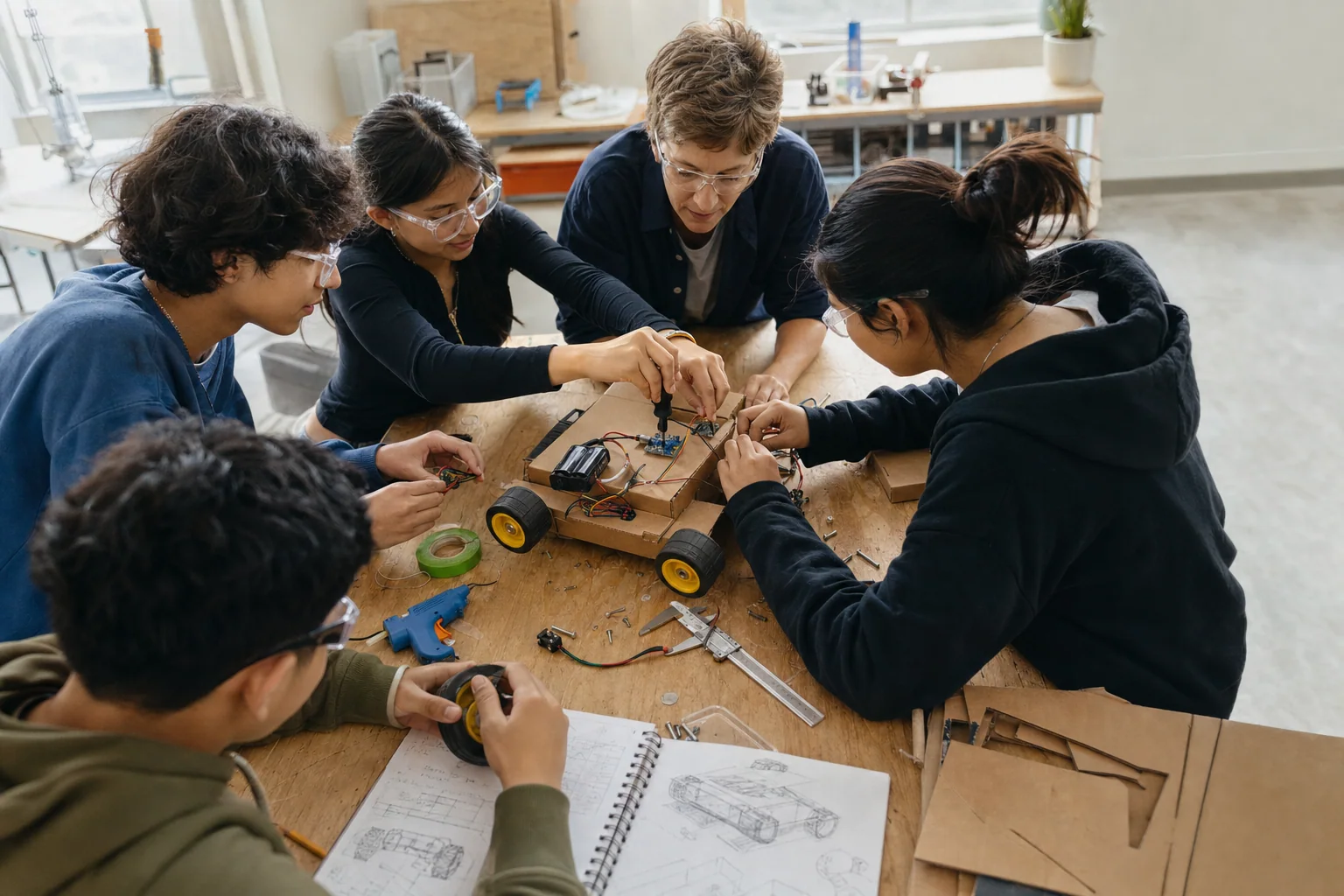
Innovation is not magic. It is a learnable practice of observation, iteration, collaboration and care.
Why this collection
The history of technology is frequently told through companies, charismatic executives or a single “eureka” moment. That makes invention feel distant-and it erases the teams, prior art and patient physical work behind the object.
Inventorbook begins with a different question: who can reliable sources connect to a specific tangible contribution? The answer spans workshop inventors, industrial designers, materials scientists, medical engineers and large collaborative teams.
The main atlas is not a ranking. It is a navigable evidence base for students, educators, makers, journalists and anyone curious about how the built world changes. Separate influence lists make their editorial criteria and subjective ordering explicit.
Editorial principles
Attribution, impact and living status each require positive support-not repetition or assumption.
Physical constraints make engineering decisions concrete, discussable and teachable.
Team language is retained whenever the sources describe shared work.
Every source is visible, uncertainty is labeled and corrections are part of the project.
Enter through curiosity
Legal operator. Inventorbook is operated by Fairfactory, a California nonprofit organization dedicated to innovation and public education in science and technology.