






Inventorbook A living atlas of physical invention

The people behind the physical world.

Meet 537 living inventors whose cameras, tools, chairs, medical devices, batteries, robots and materials changed what everyday life can do.

An editorial arrangement of unbranded invention components including a lens, drone rotor, prosthetic joint, battery, circuit board, chair mesh and hand toolOriginal image commissioned for Inventorbook
537living inventors
15hardware fields
1,030source links

Fifteen ways into the collection

Explore by the problem being solved.

From a safer helmet to a cleaner industrial process, every category starts with a physical constraint.

84 people

Consumer & Home

Objects that transformed daily routines, domestic spaces and personal habits.

Open field
14 people

Tools & Making

Hand tools, fabrication systems and instruments that extend what people can make.

Open field
29 people

Imaging & Audio

Devices that capture, reproduce and reveal sights and sounds beyond ordinary perception.

Open field
25 people

Sports & Outdoors

Equipment that changed movement, recreation, endurance and access to the outdoors.

Open field
82 people

Medical & Dental

Physical systems for diagnosis, treatment, surgery, monitoring and clinical care.

Open field
19 people

Accessibility & Assistive

Technologies designed around independence, participation and different bodies or senses.

Open field
28 people

Industrial & Manufacturing

Machines and production systems that changed how physical goods are made and moved.

Open field
34 people

Materials & Packaging

Engineered matter, coatings and containers that give products new physical behavior.

Open field
14 people

Agriculture & Water

Hardware for cultivation, food systems, clean water and environmental stewardship.

Open field
41 people

Mobility & Transport

Vehicles and transport components that changed how people and goods move.

Open field
45 people

Energy & Climate

Devices and materials for producing, storing and using energy with lower impact.

Open field
23 people

Robotics & Drones

Embodied machines that sense, move and act in homes, workplaces, oceans and air.

Open field
58 people

Electronics & Computing Hardware

Chips, components and computing devices that made digital capability physically possible.

Open field
23 people

Communications Hardware

Antennas, radios and network components that carry information through the physical world.

Open field
18 people

Safety & Security

Products that prevent harm, protect people and make hazards easier to detect or manage.

Open field
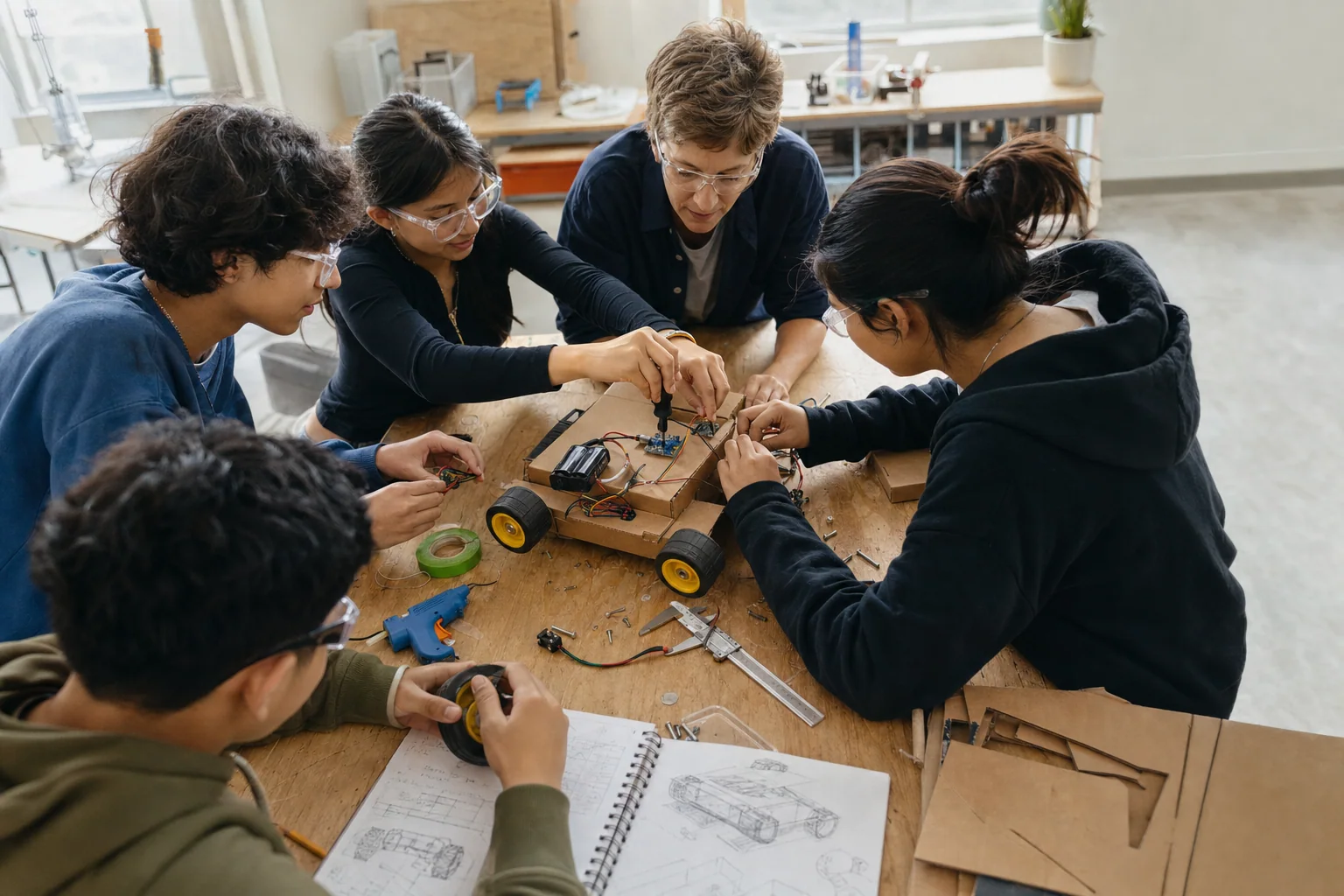
Students and an educator wearing eye protection build a wheeled prototype together at a makerspace table

Why Inventorbook exists

Innovation becomes teachable when the object is evidence.

Inventorbook helps people understand science and technology as human, collaborative work. The atlas lets students move from a finished object back through the choices, experiments and teams that made it possible.

  • 01
    Look closely

    Begin with a tangible product and the problem it addresses.

  • 02
    Follow evidence

    Read named attribution, impact and recent living-status sources.

  • 03
    See the team

    Keep co-inventor credit and prior work visible instead of manufacturing a lone genius.

Use the learning guides
1,030

Evidence before mythology

Every profile opens its sources.

The collection distinguishes invention from founding, design from promotion, and a current living person from a historical name. No profile is included because a company became famous.